Independent seaside planning for families of every pace

Coastal places

Shores for Different Family Days

Rankings tell you which beach is popular. They do not tell you whether it suits a three-year-old who naps at one, a ten-year-old who wants to find a crab and a grandparent who would rather not tackle 140 steps. Here we group real places by character, so you can match a coast to your family's pace.

Before you read: conditions on any beach change with tide, wind, swell and season. Lifeguard cover, where it exists, is usually seasonal. Treat the notes below as a description of a place's lasting character, and always follow signs, flags and lifeguard advice on the day.

Sheltered Bays for Slow, Close-to-the-Car Days

If your youngest is still at the paddling-and-digging stage, the most useful thing a beach can offer is gently shelving sand, some protection from prevailing winds and a short, level walk from where you park. A wide view is a bonus.

Calm, shallow water at Knoll Beach in Studland Bay with Old Harry Rocks faint in the distance

Studland Bay, Dorset

Studland's long curve of sand, cared for by the National Trust, runs from Shell Bay to Knoll Beach and Middle Beach, with heath and dunes behind. The water shelves gradually in many places, which is why it has long been a favourite with families of small children.

Pace
Slow and spread out; easy to find a quieter spot by walking a few minutes.
Access
Car parks behind the main beach areas; the Sandbanks chain ferry is an option from the Poole side.
Nearby
Heathland walks and views of Old Harry Rocks for a change from sand.

Note: one part of the bay has a long-established naturist area, clearly signed. Families usually stay towards Knoll and Middle Beach.
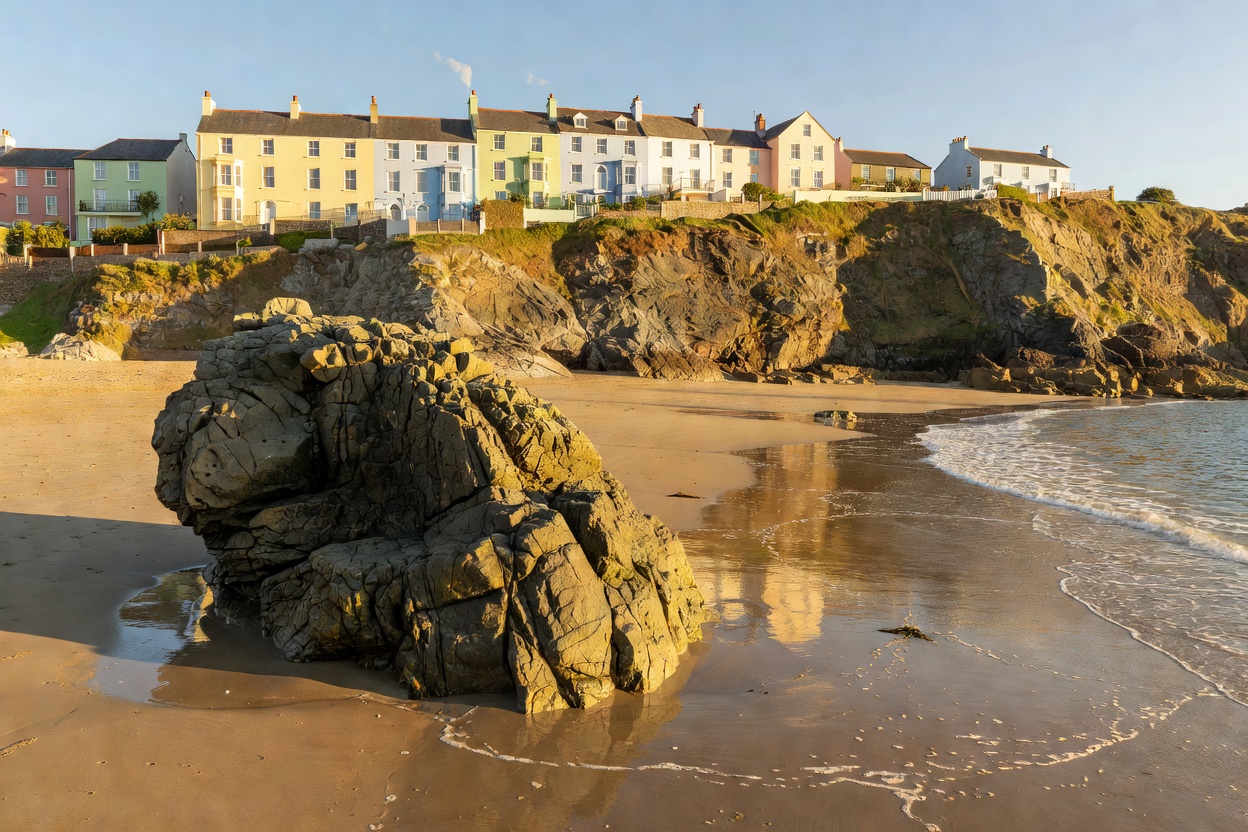
Tenby North Beach with Goscar Rock standing in the sand and pastel houses on the cliff above

Tenby and Saundersfoot, Pembrokeshire

Tenby is a walled town with several beaches within walking distance of each other. North Beach, with Goscar Rock in the middle of the sand, sits below the harbour, while Castle Beach looks out to St Catherine's Island, which is cut off at high tide. Saundersfoot, a short drive away, has a smaller harbour beach that suits a gentler day.

Pace
Mixed; the town gives plenty of rest stops.
Access
Steep paths and steps to some beaches; ask locally about the easiest routes for buggies.
Nearby
The Pembrokeshire Coast Path for short, scenic stretches.

Promenade Towns with a Built-In Plan B

Traditional resorts are underrated by planners who only look at sand quality. A long, level promenade means buggies, scooters and walking frames are all welcome, and a pier or headland gives you somewhere to go when the beach is too windy.

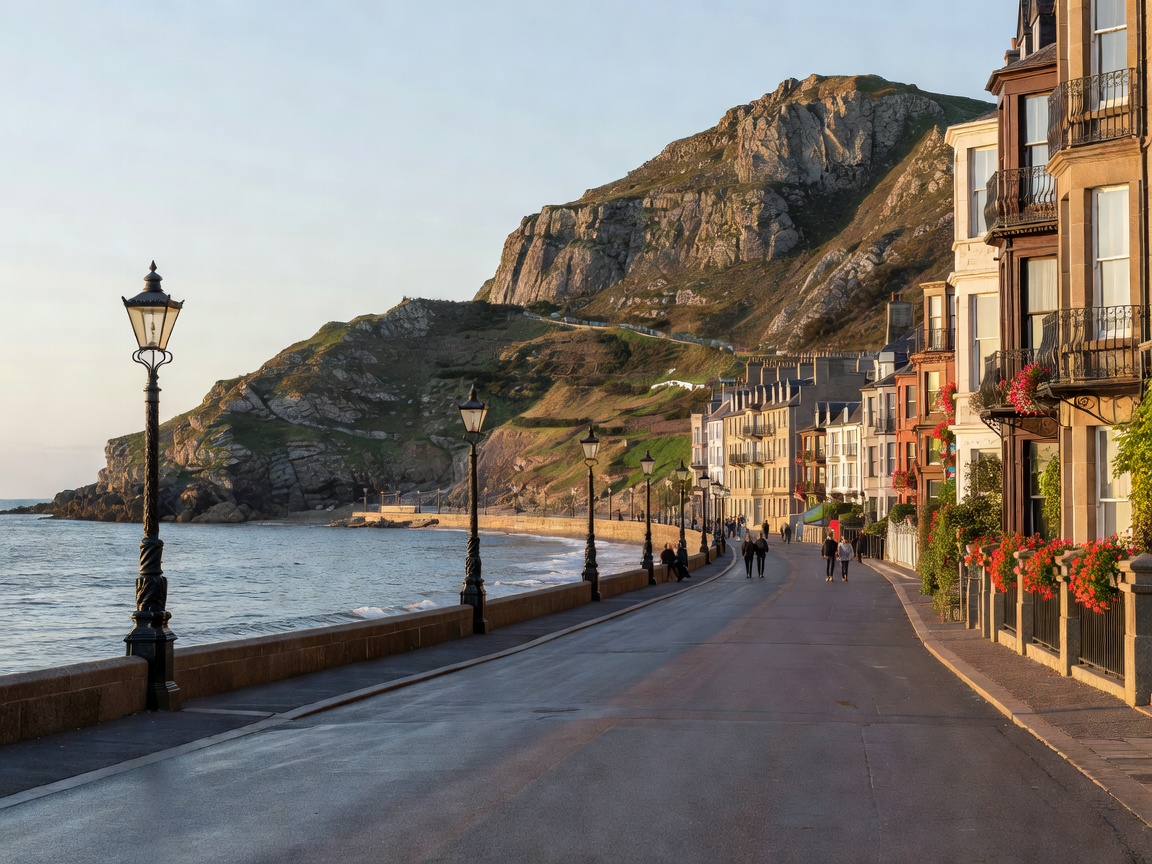
Llandudno promenade sweeping towards the limestone headland of the Great Orme

Llandudno, Conwy

The Victorian pier, a curved promenade on the North Shore and a quieter West Shore. The Great Orme Tramway climbs the headland, which is a welcome outing for anyone who cannot manage the walk.

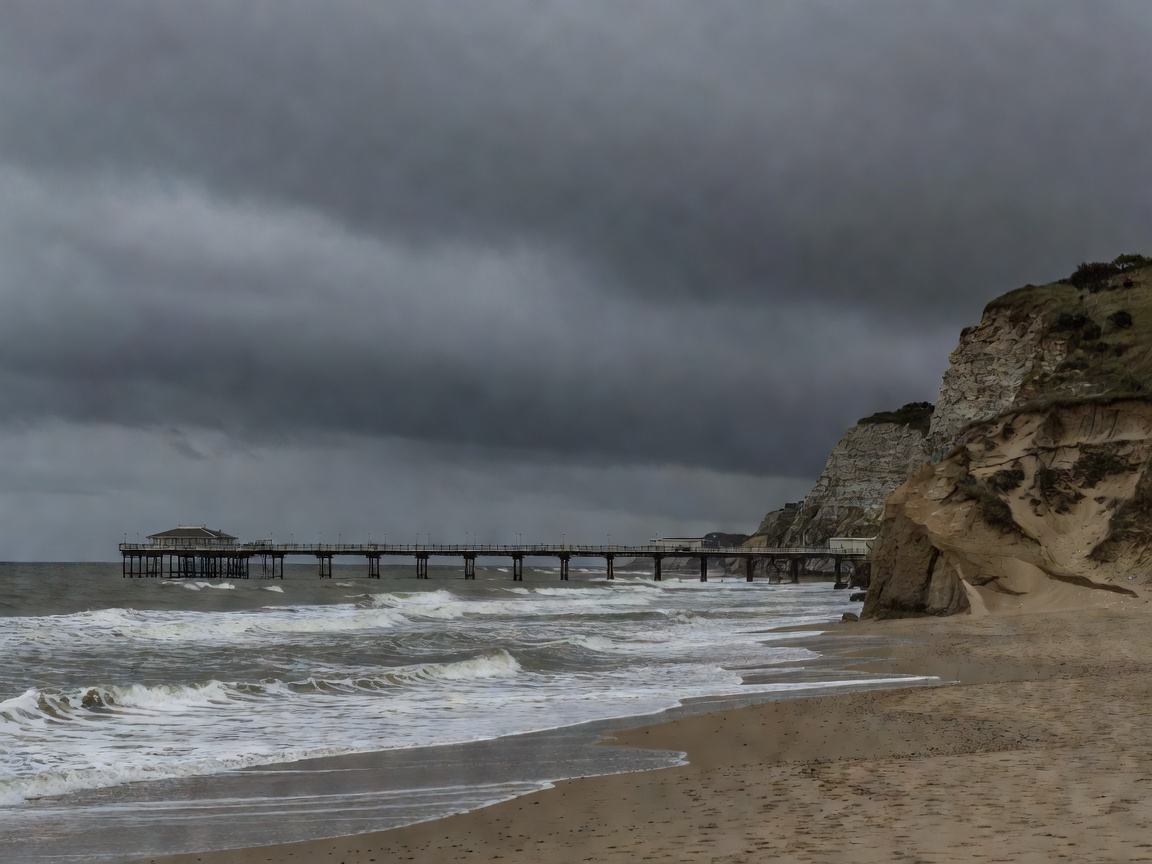
Bournemouth Pier and sandy cliffs under a heavy overcast sky

Bournemouth, Dorset

Miles of sand and seafront path linking Bournemouth, Boscombe and towards Southbourne. Busy in summer, but easy to walk away from the crowds along the front.

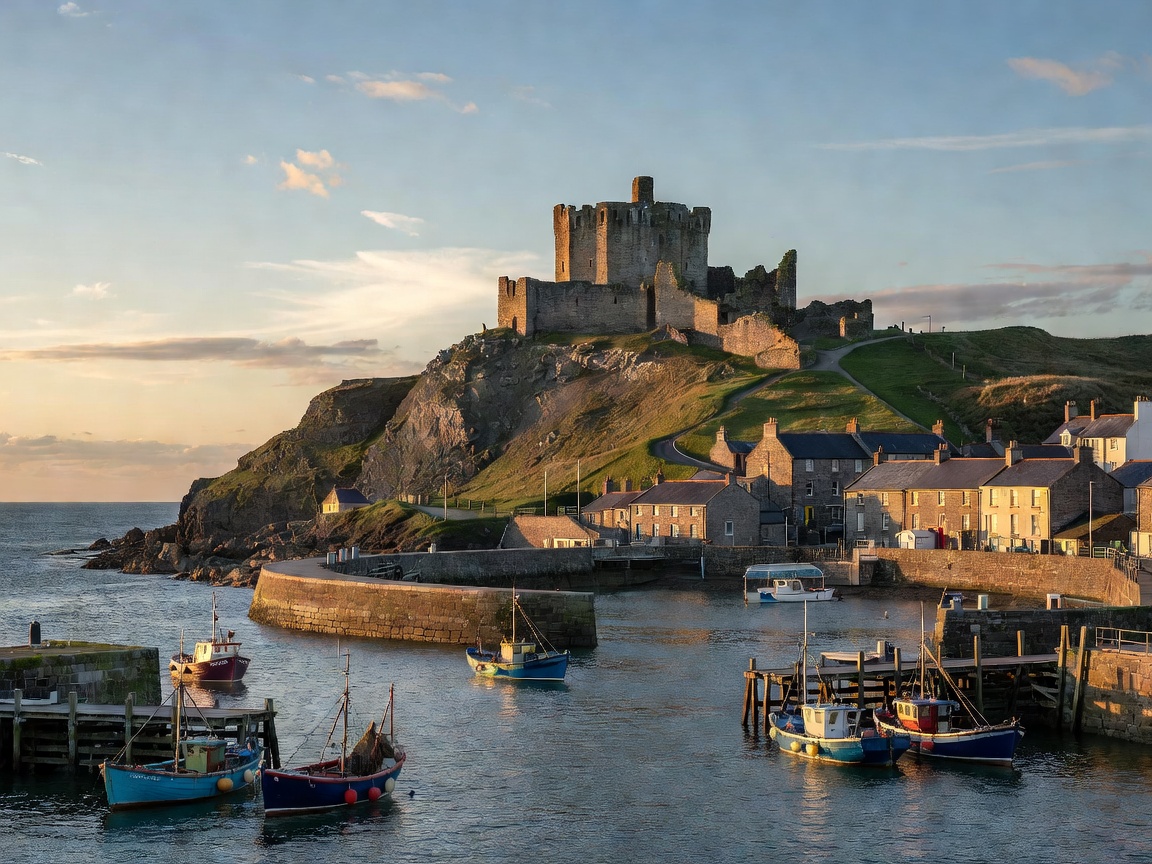
Scarborough South Bay harbour with the castle on its headland above

Scarborough, North Yorkshire

Two bays separated by a headland crowned by Scarborough Castle. South Bay is livelier; North Bay tends to feel calmer.

Rock and Fossil Coasts for Curious Explorers

These are the places children remember: arches, ledges, pools and stones with ancient creatures in them. They also ask more of you. Steep access, slippery rock and tides that can cut off a bay mean you plan around the low-water window and keep everyone well away from cliff bases.

The limestone arch of Durdle Door on the Jurassic Coast under dramatic storm light

Lulworth Cove and Durdle Door, Dorset

Part of the Jurassic Coast World Heritage Site. Lulworth Cove is an almost circular bay with a small village; Durdle Door is reached by a long, steep path and steps from the clifftop. Lovely for older children who walk well, much harder with a buggy. The cove is the gentler choice for little ones.

Robin Hood's Bay, North Yorkshire

Wide rock scars at low tide full of pools, and fossils on the beach. The lane down into the old village is very steep, and the incoming tide can cut off parts of the shore, so check tide times carefully.

Compton Bay, Isle of Wight

Near Hanover Point, dinosaur footprint casts can be seen in the rocks at low tide. The soft cliffs here are unstable; enjoy them from a distance.

Giant's Causeway, County Antrim

Tens of thousands of interlocking basalt columns, a UNESCO World Heritage Site cared for by the National Trust. Rocks can be slippery and exposed to waves, so hold small hands.

Big Open Sands for Running-Off-Energy Days

Huge beaches give children space to run, fly kites and build ambitious sandcastles. The trade-off is distance: long walks from parking, few facilities on the sand and, on flat beaches, a tide that can come in surprisingly fast.

  • Holkham, Norfolk: reached through pinewoods from Lady Anne's Drive, with an enormous stretch of sand and dunes. The flats flood quickly on a rising tide, so keep an eye on channels behind you.
  • Woolacombe, Devon: around three miles of sand facing the Atlantic, popular for surfing, with seasonal lifeguard cover. Waves and currents can be powerful.
  • Bamburgh, Northumberland: dunes and wide sand below Bamburgh Castle. The North Sea is cold even in summer; this is a beach for walks and castles more than long swims.
  • Wells-next-the-Sea, Norfolk: colourful beach huts on stilts beside pinewoods, plus a quay in town for a gentler hour.

For more ways to fill a day at any of these, see Discoveries, and for the practical side of long beach walks, see Get Ready.

Not sure which character fits?

Start with your most limiting factor: mobility, nap times or swimming confidence. Then choose the type of coast that removes the most stress.

Plan around your pace